
 When it comes to the word “marketing,” writers get squeamish.
Call our books a “product,” and you’re likely to catch a fist to the face.
Okay, maybe not a fist. But at least a curled nose and some whispered muttering about the evils of capitalism.
Well, unfortunately for your sense of social justice, capitalism is here to stay. That means that marketing is a key to getting anyone to read your stuff and, well… your book is a product.
Your book is a product.
I know, I know. It doesn’t sound right. It doesn’t feel right. So let me tell you a little story that involves some mountains, a national park, and the inescapable crowd of Humanity.
People pay for experiences
I went on a vacation in the fall to upstate New York. It was an adult vacation – just three days – so my girlfriend and I were determined to pack in every possible Experience.
We drove to New Paltz, New York, where there’s the beautiful Mohonk National Preserve, which is about 7,000 acres of pure beauty.
It also costs $12 a person to get in.
Yes, the Mohonk National Preserve charges more than most Boston bars on a Saturday night.
They even give you the same stylish, neon VIP wristband. The next day, people could suspect you spent your Saturday clubbing, instead of journeying through truly pristine wilderness.
So, okay, of course I’ll pay $12. Or $24, since the ancient laws of chivalry dictated that I pay for my girlfriend, too.
Sure, I could have bought 2.5 albums for that, or had my oil changed or something, but I knew this would be memorable.
I knew the Mohonk National Preserve would be an experience.
And, more than anything else, people pay for experiences.
Earning my $12
You don’t have to work hard to “earn” your $12 from Mohonk National Preserve, but that was my first instinct.
“Twelve dollars!” I proclaimed incredulously, post-payment. “This better be worth it.”
Of course, what’s ‘worth’ it when you don’t have a tangible thing to show for it?
The experience.
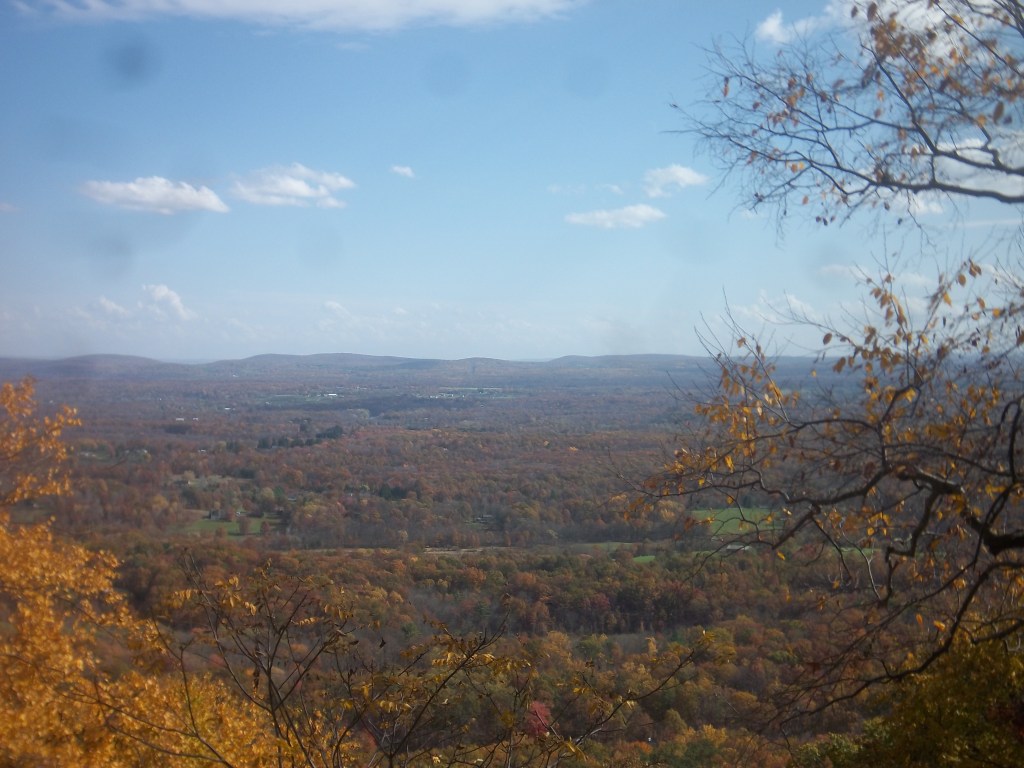
Lucky for me, you don’t have to work hard to “earn” a sweeping, natural vista when you visit the Mohonk National Preserve.
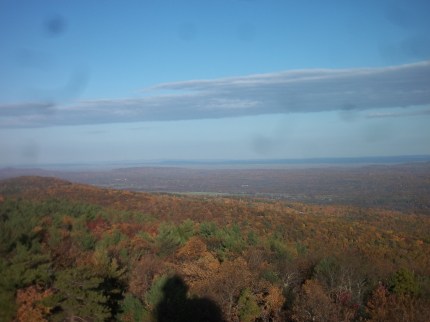
You climb a few steps and suddenly all of New York State is laid out out like a patchwork quilt of farmlands, rolling hills, and explosions of ruby, topaz, and emerald.
Because fall turns trees into gems.
The thing is, after we climbed a few more slopes, we suddenly came upon a breathtaking Victorian hotel nestled by a cliff, overlooking a lake.
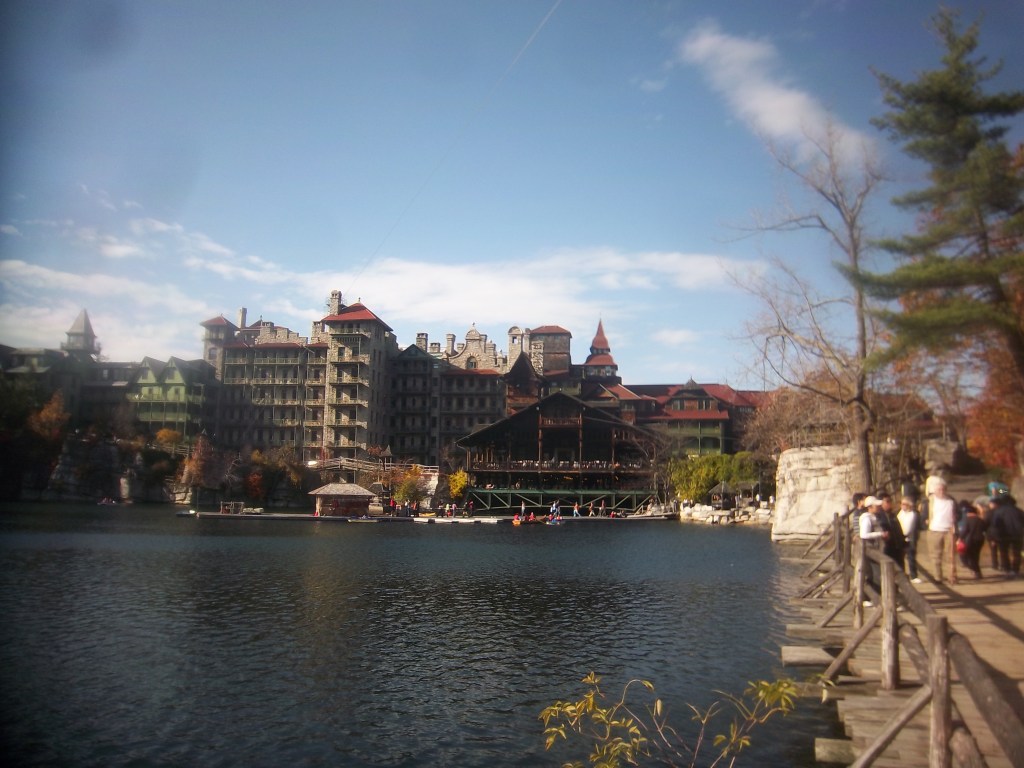
It is, quite inappropriately, named the Mohonk Mountain House, a name that summons images of crooked walls and a sagging roof.
I guess that the people behind this particular nomenclature decided that they preferred the alliterative ecstasy of ‘Mohonk Mountain’ to the more accurate term of ‘Mohonk Castle’ or ‘Mohonk Chateau.’
People will pay premium for premium experiences
The Mohonk Mountain House is a hiker-and-investment banker paradise in one.
No matter what, you can already tell that staying there would be an incredible experience, at least until you looked at the bill. And, really, look at it. You’d pay to stay there.
Why? Because of the experience.
Not just the experience, though, the experience of the experience. You know that the second you drop your bags in your room, you’ll be whisked away to another place.
The more immersive an experience, the better. Whether book or movie or concert or massage or cruise or plane ticket, people are willing to pay for that experience.
The peak
What made me think about all of this was when I attempted a daring series of twists and tunnels on a trail known as “The Labyrinth.”
The views were splendid, the experience unforgettable. Sure, I got caught behind a woman who insisted on wearing heels for a while, but I managed to scramble up a boulder and pass her.
That way, my girlfriend and I could fully appreciate our climb without being interrupted, without being reminded, of the real world.
Until we got stuck in a traffic jam. Yes, there was a traffic jam in “The Labyrinth.”
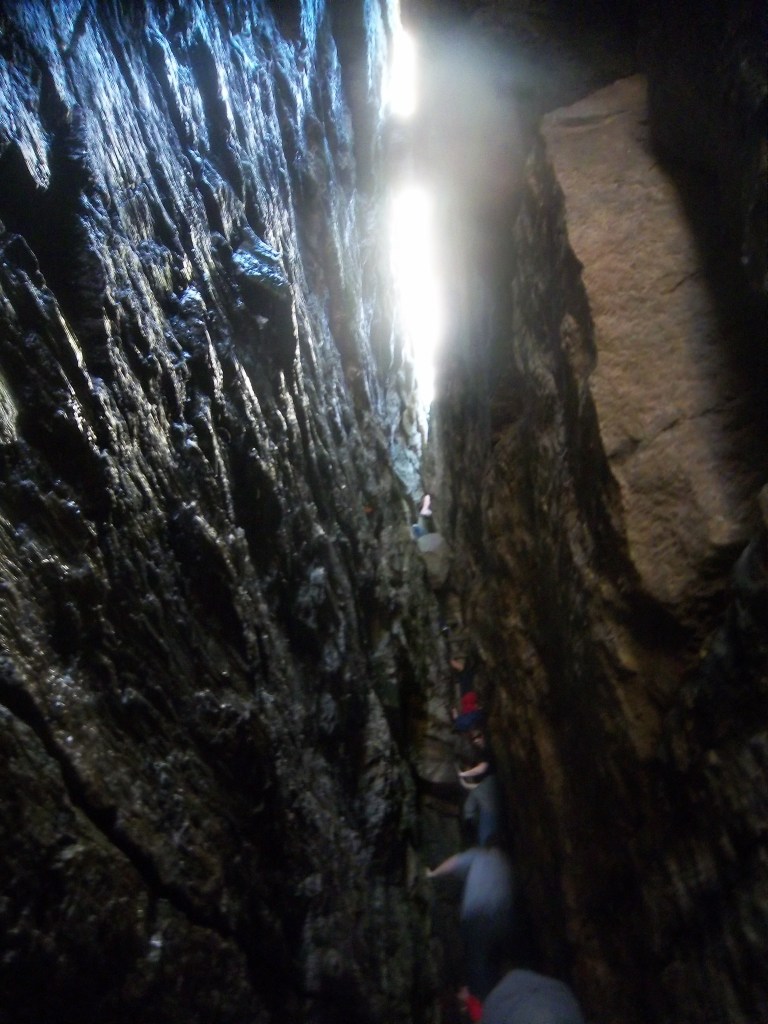
More than twenty people were wedged in a tight crevice that required multiple ladders to successfully escape.
Behind us, there was a group of kids in their twenties professing to being real mountain climbers, boasting that they could shimmy their way up and out of the crevice if it “wasn’t so wet.”
In front of us, there was a foursome that was undeniably from New Jersey, clomping boots against the rock and swearing about the wait.
The line went on and on, as diverse a group as you’d find in New York City itself.
In seconds, everyone had suddenly rebounded from the exultation of the natural world, the elation of experience, to their standard, rehearsed personalities.
We were all impatient to get to the top, where we knew the biggest experience, the biggest memory, the biggest reward would await us.
Of course, even the watchtower, of course, was filled to the brim with people.
But, if you looked out over the edge, you could pretend, for a moment, that this was Your Experience.
Creative people are experience producers
As writers, as visual artists, and as musicians, creative people create experiences for others to enjoy.
The product is the thing that brings people that experience in full: a piece of artwork, a song, a book.
So, the next time you’re recoiling from the idea that your book is a product that needs to be marketed, just remember that your particular product takes people for a journey that should change the way they think and feel.
The next step is to ask: who’s going to enjoy this experience? Who’s looking for this particular journey through the mountains of imagination?
Because those are the first steps to marketing your product.
The breakdown
1. Experiences are what the most premium of products create. Your book should give readers an unforgettable experience, from start to finish.
2. Product isn’t a dirty word, it takes something you’ve created and puts it in a very useful context: you can call your writing “art,” but you’re not exactly selling a single sculpture, you’re selling a mass-produced, single experience.
3. Market with the reader’s experience in mind. How can you lead them through a series of small experiences to convince them that they would love the ultimate experience of your book?
Looking for more help? I’m working on a guide to Facebook & content marketing for early 2013.
If you’re interested, sign up for The Creative Brief, my free monthly newsletter, and I’ll email it to you as soon as it’s ready!
 blaiselucey.com
Leave a reply to aapatawaran Cancel reply